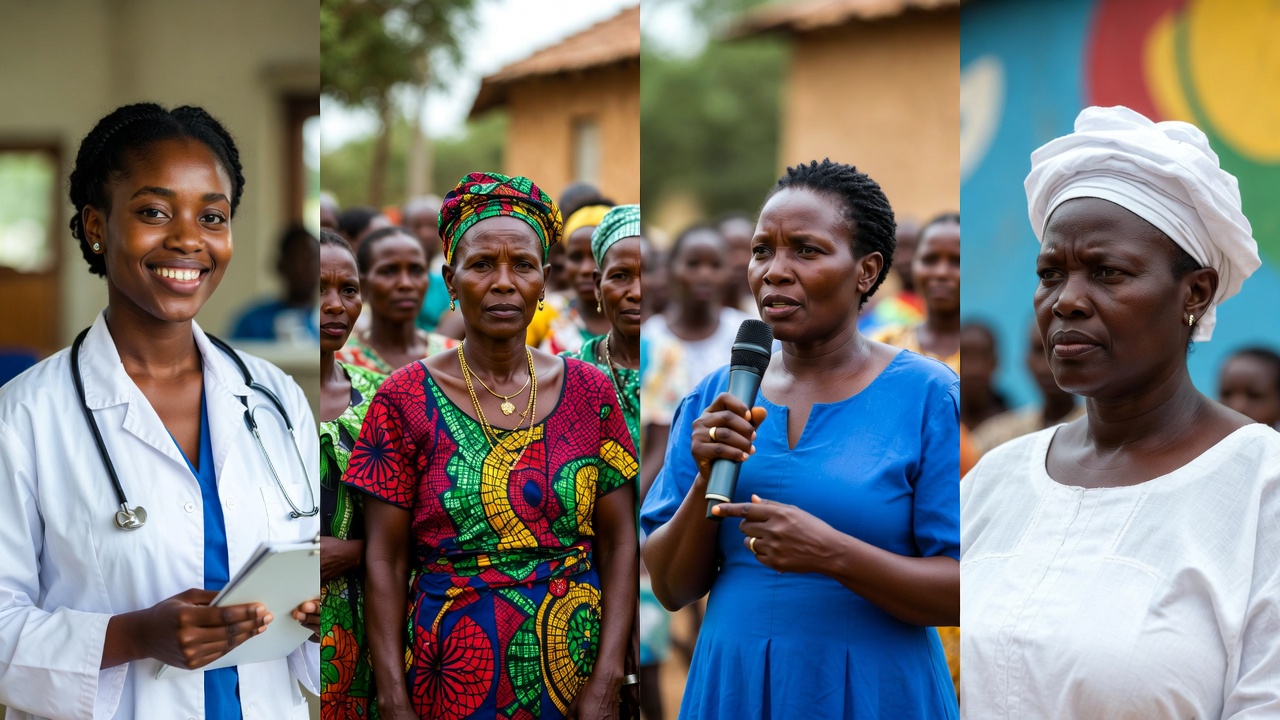
GTIL Leadership Framework
A flagship initiative of Women in Global Health Kenya
Strengthening gender-transformative leadership across health systems.
Gender Transformative Inclusive Leadership (GTIL)
WGH Kenya Flagship Leadership Framework
The Gender Transformative Inclusive Leadership (GTIL) Programme is the flagship leadership initiative of Women in Global Health Kenya, designed to strengthen inclusive and gender-transformative leadership across health systems.
Developed by WGH Kenya, GTIL responds to persistent leadership and governance gaps within the health sector, where women form the majority of the workforce but remain underrepresented in decision-making spaces. The framework equips leaders with the skills, knowledge, and confidence required to influence policy, governance, and accountability processes that shape health outcomes.
Why GTIL
Equitable health systems require leadership that reflects the diversity of the communities they serve. However, structural barriers continue to limit women’s participation and influence within leadership and governance spaces.
GTIL was developed to address these systemic gaps by strengthening leadership capacity and creating pathways for meaningful participation in health decision-making at community, national, and global levels.
The GTIL Framework
GTIL combines leadership development, gender analysis, and systems thinking to support leaders in effectively engaging in governance and policy processes.
The framework focuses on:
Gender-transformative leadership skills
Health governance and policy engagement
Advocacy and accountability mechanisms
Inclusive decision-making and power analysis
Mentorship and peer learning
Implementation Approach
GTIL integrates structured training, mentorship, and applied learning to ensure practical leadership outcomes beyond classroom engagement.
Initial implementation focused on Community Health Promoters and grassroots women leaders, demonstrating the effectiveness of the framework in strengthening leadership at the community level. The model is adaptable and can be applied across professional, institutional, and policy leadership contexts.
GTIL Curriculum
WGH Kenya designed and launched the GTIL Curriculum, a locally developed leadership resource grounded in Kenya’s health system realities.
The curriculum provides a structured pathway for developing leaders capable of influencing governance processes, strengthening accountability, and advancing gender-responsive health systems.
Impact to Date
20 Community Health Promoters and 10 women leaders trained and mentored through GTIL
Leadership capacity strengthened across county and community health structures
National GTIL Curriculum developed and disseminated
Increased participation of women leaders in governance and policy dialogue spaces